Media Summary: Switch forward methods, symmetric and asymmetric switching, memory buffering and layer Cisco Welcome to the Cisco NETACAD Introduction to Networks Video Series by Jason Johnson This ... This is the second module of a series of videos I will publish on the Cisco NetAcad (

Ccna 3 Part 2 Basic - Detailed Analysis & Overview

Switch forward methods, symmetric and asymmetric switching, memory buffering and layer Cisco Welcome to the Cisco NETACAD Introduction to Networks Video Series by Jason Johnson This ... This is the second module of a series of videos I will publish on the Cisco NetAcad ( Configure an OSPFv2 router ID Configure single-area OSPFv2 in a point-to-point network. Configure the OSPF interface priority to ... IMPORTANT NOTE: For better preparation, I recommend my well-organized Udemy course, which includes slides, bite-sized ... Download the Packet Tracer 6.3 file in the video at:

SRWE Practice PT Skills Assessment (PTSA) - Network redundancy is the ability of the network to survive failure of a single path, or multiple paths, and maintain connectivity.

Photo Gallery

CCNA 3 - Part 2 -  Basic Switch Concepts and Configuration
CCNA 3  Chapter 2
CCNA 200-301 Course - Section 3: Part 2 - What is IP Routing?
Intro To Networks v7   Module 3, Part 2 of 2   Cisco CCNA NETACAD
CCNA3 Mod 2: Single Area OSPFv2 Configuration - Enterprise Networking Security and Automation (ENSA)
CCNA3-ENSAv7 - Lecture Module 02 - Area OSPFv2 Configuration
CCNA 200-301 Course - Section 2: Part 3 - LAN: Wireless Technology Explained
CCNA3 Module 2 PART2 Single Area OSPFv2 Configuration
CCNA3 Chapter2
CCNA Course for Beginners - Full Course 10 Hours (Part 2)
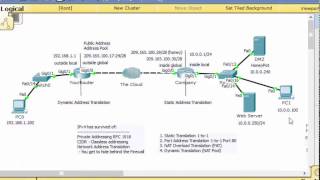
NAT basics for beginners CCNA - Part 2
SRWE Practice PT Skills Assessment (PTSA) - Part 2
View Detailed Profile
CCNA 3 - Part 2 -  Basic Switch Concepts and Configuration

CCNA 3 - Part 2 - Basic Switch Concepts and Configuration

Switch forward methods, symmetric and asymmetric switching, memory buffering and layer

CCNA 3  Chapter 2

CCNA 3 Chapter 2

CCNA

CCNA 200-301 Course - Section 3: Part 2 - What is IP Routing?

CCNA 200-301 Course - Section 3: Part 2 - What is IP Routing?

This is the seventh video in the

Intro To Networks v7   Module 3, Part 2 of 2   Cisco CCNA NETACAD

Intro To Networks v7 Module 3, Part 2 of 2 Cisco CCNA NETACAD

Cisco #IntrotoNetworks #Netacad Welcome to the Cisco NETACAD Introduction to Networks Video Series by Jason Johnson This ...

CCNA3 Mod 2: Single Area OSPFv2 Configuration - Enterprise Networking Security and Automation (ENSA)

CCNA3 Mod 2: Single Area OSPFv2 Configuration - Enterprise Networking Security and Automation (ENSA)

This is the second module of a series of videos I will publish on the Cisco NetAcad (

CCNA3-ENSAv7 - Lecture Module 02 - Area OSPFv2 Configuration

CCNA3-ENSAv7 - Lecture Module 02 - Area OSPFv2 Configuration

Module

CCNA 200-301 Course - Section 2: Part 3 - LAN: Wireless Technology Explained

CCNA 200-301 Course - Section 2: Part 3 - LAN: Wireless Technology Explained

This is the fifth video in the

CCNA3 Module 2 PART2 Single Area OSPFv2 Configuration

CCNA3 Module 2 PART2 Single Area OSPFv2 Configuration

Configure an OSPFv2 router ID Configure single-area OSPFv2 in a point-to-point network. Configure the OSPF interface priority to ...

CCNA3 Chapter2

CCNA3 Chapter2

CCNA3v6 Chapter

CCNA Course for Beginners - Full Course 10 Hours (Part 2)

CCNA Course for Beginners - Full Course 10 Hours (Part 2)

IMPORTANT NOTE: For better preparation, I recommend my well-organized Udemy course, which includes slides, bite-sized ...

NAT basics for beginners CCNA - Part 2

NAT basics for beginners CCNA - Part 2

Download the Packet Tracer 6.3 file in the video at: http://danscourses.com/configure-nat-

SRWE Practice PT Skills Assessment (PTSA) - Part 2

SRWE Practice PT Skills Assessment (PTSA) - Part 2

SRWE Practice PT Skills Assessment (PTSA) -

2.1 - Spanning Tree Concepts Part  -  CCNA 3 - Chapter 2

2.1 - Spanning Tree Concepts Part - CCNA 3 - Chapter 2

Network redundancy is the ability of the network to survive failure of a single path, or multiple paths, and maintain connectivity.