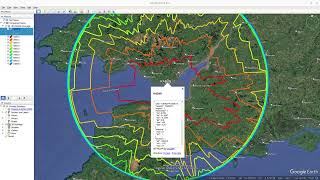
Media Summary: Tutorial on using the route analysis function within Covers primary RF settings for the transmitter and receiver and template functionality. Templates help Covers the creation of custom colour schemas for use in signal heatmap generation. Getting a colour key right is more than just ...

Cloudrf User Interface Environment And - Detailed Analysis & Overview

Tutorial on using the route analysis function within Covers primary RF settings for the transmitter and receiver and template functionality. Templates help Covers the creation of custom colour schemas for use in signal heatmap generation. Getting a colour key right is more than just ... Tutorial on the Best Site Analysis capability. This powerful GPU feature tests hundreds of sites in a Using and creating antenna patterns within the Covers the available options for working with propagation models within the

Tutorial for 5 core analysis functions in In this tutorial, you will learn how to load reference data for analysis with the data import utility (added to the Tutorial on performing 3D Airspace analysis using the

Photo Gallery

CloudRF user interface: Environment and layers (Landcover, Buildings, Clutter)
CloudRF user interface: Route analysis and Multipoint links
CloudRF user interface: Introduction, navigation and mapping
CloudRF user interface: RF settings and Templates
CloudRF user interface: Creating and using custom colour schemas
CloudRF user interface: Best Site Analysis
CloudRF user interface: Antenna patterns
CloudRF legacy TAK interface setup
CloudRF user interface: Propagation models
CloudRF user interface: Analysis functions (Path tool,Best Server,Archive,Super layer,Interference)
CloudRF API tutorial - Python on Windows
CloudRF tutorial: Loading and using reference data (CSV,KML,JSON)
View Detailed Profile
CloudRF user interface: Environment and layers (Landcover, Buildings, Clutter)

CloudRF user interface: Environment and layers (Landcover, Buildings, Clutter)

Covers the available layers in the

CloudRF user interface: Route analysis and Multipoint links

CloudRF user interface: Route analysis and Multipoint links

Tutorial on using the route analysis function within

CloudRF user interface: Introduction, navigation and mapping

CloudRF user interface: Introduction, navigation and mapping

Introduction to the

CloudRF user interface: RF settings and Templates

CloudRF user interface: RF settings and Templates

Covers primary RF settings for the transmitter and receiver and template functionality. Templates help

CloudRF user interface: Creating and using custom colour schemas

CloudRF user interface: Creating and using custom colour schemas

Covers the creation of custom colour schemas for use in signal heatmap generation. Getting a colour key right is more than just ...

CloudRF user interface: Best Site Analysis

CloudRF user interface: Best Site Analysis

Tutorial on the Best Site Analysis capability. This powerful GPU feature tests hundreds of sites in a

CloudRF user interface: Antenna patterns

CloudRF user interface: Antenna patterns

Using and creating antenna patterns within the

CloudRF legacy TAK interface setup

CloudRF legacy TAK interface setup

Adding the

CloudRF user interface: Propagation models

CloudRF user interface: Propagation models

Covers the available options for working with propagation models within the

CloudRF user interface: Analysis functions (Path tool,Best Server,Archive,Super layer,Interference)

CloudRF user interface: Analysis functions (Path tool,Best Server,Archive,Super layer,Interference)

Tutorial for 5 core analysis functions in

CloudRF API tutorial - Python on Windows

CloudRF API tutorial - Python on Windows

An introduction to using the powerful

CloudRF tutorial: Loading and using reference data (CSV,KML,JSON)

CloudRF tutorial: Loading and using reference data (CSV,KML,JSON)

In this tutorial, you will learn how to load reference data for analysis with the data import utility (added to the

3D Airspace analysis using the CloudRF API

3D Airspace analysis using the CloudRF API

Tutorial on performing 3D Airspace analysis using the