Media Summary: area coverage algorithm with no reward function Video from the published paper "Optimizing and Predicting Swarming Collective Motion Performance for Speaker: Maria Luiza Costa Vianna (École Polytechnique, Laboratoire d'Informatique (LIX), Palaiseau, and ENSTA Bretagne ...

Complete Area Coverage Algorithm - Detailed Analysis & Overview

area coverage algorithm with no reward function Video from the published paper "Optimizing and Predicting Swarming Collective Motion Performance for Speaker: Maria Luiza Costa Vianna (École Polytechnique, Laboratoire d'Informatique (LIX), Palaiseau, and ENSTA Bretagne ... This is a project in the "Robotic Systems" course in the department of Electrical Engineering and Computer Science at the ... This video is about using biased min-consensus to solve a Complete Coverage of an a priori Unknown Environment using a Single Autonomous System Scenario 2

This video shows the preliminar running of Complete Coverage of an a priori Unknown Environment using a Single Autonomous System Scenario 1
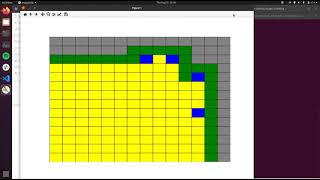
Photo Gallery

complete area coverage algorithm
AI Complete Coverage Algorithm
Analysis of compelte coverage algorithm
area coverage algorithm with no reward function
Coverage STC algorithm
Comparison with State-of-the-Art Swarm Algorithms for Solving the Complete Coverage Problem
A Geometric Approach to the Coverage Measure of the Area Explored by a Robot
Area Coverage
Video 4: Robot movements during the process of complete coverage
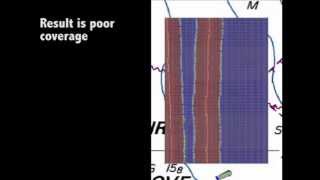
Area Coverage Planning that Accounts for Pose Uncertainty with an AUV Seabed Surveying Application
Complete Coverage of an a priori Unknown Environment using a Single Autonomous System Scenario 2
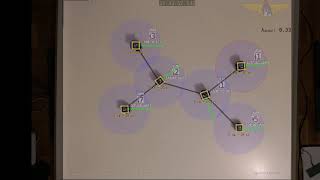
Epucks running topological algorithms: coverage area
View Detailed Profile
complete area coverage algorithm

complete area coverage algorithm

complete area coverage algorithm

AI Complete Coverage Algorithm

AI Complete Coverage Algorithm

Results of the standard

Analysis of compelte coverage algorithm

Analysis of compelte coverage algorithm

COmplete coverage algorithm

area coverage algorithm with no reward function

area coverage algorithm with no reward function

area coverage algorithm with no reward function

Coverage STC algorithm

Coverage STC algorithm

Simulator code: https://bitbucket.org/galk-opensource/krembot_sim.

Comparison with State-of-the-Art Swarm Algorithms for Solving the Complete Coverage Problem

Comparison with State-of-the-Art Swarm Algorithms for Solving the Complete Coverage Problem

Video from the published paper "Optimizing and Predicting Swarming Collective Motion Performance for

A Geometric Approach to the Coverage Measure of the Area Explored by a Robot

A Geometric Approach to the Coverage Measure of the Area Explored by a Robot

Speaker: Maria Luiza Costa Vianna (École Polytechnique, Laboratoire d'Informatique (LIX), Palaiseau, and ENSTA Bretagne ...

Area Coverage

Area Coverage

This is a project in the "Robotic Systems" course in the department of Electrical Engineering and Computer Science at the ...

Video 4: Robot movements during the process of complete coverage

Video 4: Robot movements during the process of complete coverage

This video is about using biased min-consensus to solve a

Area Coverage Planning that Accounts for Pose Uncertainty with an AUV Seabed Surveying Application

Area Coverage Planning that Accounts for Pose Uncertainty with an AUV Seabed Surveying Application

Most

Complete Coverage of an a priori Unknown Environment using a Single Autonomous System Scenario 2

Complete Coverage of an a priori Unknown Environment using a Single Autonomous System Scenario 2

Complete Coverage of an a priori Unknown Environment using a Single Autonomous System Scenario 2

Epucks running topological algorithms: coverage area

Epucks running topological algorithms: coverage area

This video shows the preliminar running of

Complete Coverage of an a priori Unknown Environment using a Single Autonomous System Scenario 1

Complete Coverage of an a priori Unknown Environment using a Single Autonomous System Scenario 1

Complete Coverage of an a priori Unknown Environment using a Single Autonomous System Scenario 1