Media Summary: 0:00 ⇒ Introduction ⏱ 2:01 ⇒ Part 1: What are Timescale is a mega-fast time-series database built on top of Postgres with full SQL support Learn basics ... TimescaleTuesday is a weekly stream that explores TimescaleDB features and questions. In this episode, and ...

Getting Started With Continuous Aggregates - Detailed Analysis & Overview

0:00 ⇒ Introduction ⏱ 2:01 ⇒ Part 1: What are Timescale is a mega-fast time-series database built on top of Postgres with full SQL support Learn basics ... TimescaleTuesday is a weekly stream that explores TimescaleDB features and questions. In this episode, and ... Supercharge Your Time-Series Analytics with TimescaleDB Performing analysis on time-series data often involves using In this video, Developer Advocate finishes a three-part series looking at some of the common ...

Learn how to set up and feed trade data to a timescale DB instance from Python. We'll also look at

Photo Gallery

Getting Started With Continuous Aggregates
Getting started with continuous aggregates in multi-node TimescaleDB | TimescaleDB 2.5
SQL Query Optimization Using TimescaleDB Continuous Aggregates
TimescaleDB in 100 Seconds
#TimescaleTuesday: Common questions with Continuous Aggregates
Using Continuous Aggregate Refresh Policies
Building Real-Time Analytics with Continuous Aggregates and Refresh Policies
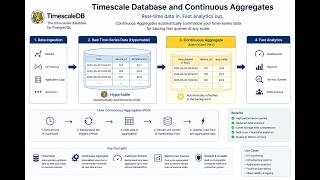
Timescale Database and Continuous Aggregates
Faster queries with time-series data on PostgreSQL: Continuous Aggregates in TimescaleDB
One-Step Policy for Continuous Aggregates in Timescale Cloud
#TimescaleTuesday - Fixing Continuous Aggregate Refresh Policies
Working with Timescale continuous aggregates in Ruby
View Detailed Profile
Getting Started With Continuous Aggregates

Getting Started With Continuous Aggregates

0:00 ⇒ Introduction ⏱ 2:01 ⇒ Part 1: What are

Getting started with continuous aggregates in multi-node TimescaleDB | TimescaleDB 2.5

Getting started with continuous aggregates in multi-node TimescaleDB | TimescaleDB 2.5

We

SQL Query Optimization Using TimescaleDB Continuous Aggregates

SQL Query Optimization Using TimescaleDB Continuous Aggregates

This is the first half of the videos on

TimescaleDB in 100 Seconds

TimescaleDB in 100 Seconds

Timescale is a mega-fast time-series database built on top of Postgres with full SQL support https://tsdb.co/ts-fireship. Learn basics ...

#TimescaleTuesday: Common questions with Continuous Aggregates

#TimescaleTuesday: Common questions with Continuous Aggregates

TimescaleTuesday is a weekly stream that explores TimescaleDB features and questions. In this episode, @ryanbooz and ...

Using Continuous Aggregate Refresh Policies

Using Continuous Aggregate Refresh Policies

This is the second half of the videos on

Building Real-Time Analytics with Continuous Aggregates and Refresh Policies

Building Real-Time Analytics with Continuous Aggregates and Refresh Policies

Supercharge Your Time-Series Analytics with TimescaleDB

Timescale Database and Continuous Aggregates

Timescale Database and Continuous Aggregates

Learn how TimescaleDB uses

Faster queries with time-series data on PostgreSQL: Continuous Aggregates in TimescaleDB

Faster queries with time-series data on PostgreSQL: Continuous Aggregates in TimescaleDB

Performing analysis on time-series data often involves using

One-Step Policy for Continuous Aggregates in Timescale Cloud

One-Step Policy for Continuous Aggregates in Timescale Cloud

... Documentation: https://tsdb.co/cont-aggregates

#TimescaleTuesday - Fixing Continuous Aggregate Refresh Policies

#TimescaleTuesday - Fixing Continuous Aggregate Refresh Policies

In this #TimescaleTuesday video, Developer Advocate @ryanbooz finishes a three-part series looking at some of the common ...

Working with Timescale continuous aggregates in Ruby

Working with Timescale continuous aggregates in Ruby

In this episode, we create support for

TimescaleDB for Algotrading - Full course in Python

TimescaleDB for Algotrading - Full course in Python

Learn how to set up and feed trade data to a timescale DB instance from Python. We'll also look at