Media Summary: Native integration with Git repositories to provide state-of-the-art collaboration, versioning, branching, conflict resolution, peer ... With the fork & pull strategy, contributors The purpose of reusable definitions is to increase productivity/convenience and consistency to achieve higher data quality and ...

Hackolade Tutorial Part 11 Create - Detailed Analysis & Overview

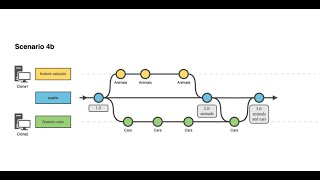
Native integration with Git repositories to provide state-of-the-art collaboration, versioning, branching, conflict resolution, peer ... With the fork & pull strategy, contributors The purpose of reusable definitions is to increase productivity/convenience and consistency to achieve higher data quality and ... JSON stands for JavaScript Object Notation. It is a lightweight data-interchange format. It is easy for humans to read and write. We illustrate how you can have two feature branches (feature-cars and feature-animals) that are added to the model, and that are ...
Photo Gallery

Hackolade Tutorial - Part 11   Create a model for graph databases
Hackolade Studio Workgroup Edition overview
Hackolade Tutorial - Part 1: What is a data model?
Hackolade Tutorial - Part 10: Generate documentation and pictures
Tutorial Getting Started part 1: Overview
Tutorial Getting Started part 2   Polyglot Data Modeling
Tutorial Workgroup - Working with Forks
How-To: Reusable definitions
Hackolade Tutorial - Part 4: Create your first data model
Hackolade Studio - Getting Started  -  01 -  Quick Tour
Hackolade Tutorial - Part 2: Overview of JSON and JSON schema
Tutorial Workgroup - model versioning and collaboration - episode 1: overview
View Detailed Profile
Hackolade Tutorial - Part 11   Create a model for graph databases

Hackolade Tutorial - Part 11 Create a model for graph databases

By the end of this

Hackolade Studio Workgroup Edition overview

Hackolade Studio Workgroup Edition overview

Native integration with Git repositories to provide state-of-the-art collaboration, versioning, branching, conflict resolution, peer ...

Hackolade Tutorial - Part 1: What is a data model?

Hackolade Tutorial - Part 1: What is a data model?

First in a series of

Hackolade Tutorial - Part 10: Generate documentation and pictures

Hackolade Tutorial - Part 10: Generate documentation and pictures

By the end of this

Tutorial Getting Started part 1: Overview

Tutorial Getting Started part 1: Overview

Hackolade

Tutorial Getting Started part 2   Polyglot Data Modeling

Tutorial Getting Started part 2 Polyglot Data Modeling

With

Tutorial Workgroup - Working with Forks

Tutorial Workgroup - Working with Forks

With the fork & pull strategy, contributors

How-To: Reusable definitions

How-To: Reusable definitions

The purpose of reusable definitions is to increase productivity/convenience and consistency to achieve higher data quality and ...

Hackolade Tutorial - Part 4: Create your first data model

Hackolade Tutorial - Part 4: Create your first data model

By the end of this

Hackolade Studio - Getting Started  -  01 -  Quick Tour

Hackolade Studio - Getting Started - 01 - Quick Tour

Five-minute tour of the

Hackolade Tutorial - Part 2: Overview of JSON and JSON schema

Hackolade Tutorial - Part 2: Overview of JSON and JSON schema

JSON stands for JavaScript Object Notation. It is a lightweight data-interchange format. It is easy for humans to read and write.

Tutorial Workgroup - model versioning and collaboration - episode 1: overview

Tutorial Workgroup - model versioning and collaboration - episode 1: overview

Hackolade

Tutorial Workgroup - model versioning and collaboration - episode 6: feature branch changes

Tutorial Workgroup - model versioning and collaboration - episode 6: feature branch changes

We illustrate how you can have two feature branches (feature-cars and feature-animals) that are added to the model, and that are ...