Media Summary: MIT 14.12 Economic Applications of Game Theory, Fall 2025 Instructor: Ian Ball View the complete course: ... MIT 18.650 Statistics for Applications, Fall 2016 View the complete course: Instructor: Philippe ... Reducing probabilistic reasoning (MAR) to weighted model counting (WMC). Exploiting local structure (parametric structure) of ...

Lecture 17 Bayesian Learning - Detailed Analysis & Overview

MIT 14.12 Economic Applications of Game Theory, Fall 2025 Instructor: Ian Ball View the complete course: ... MIT 18.650 Statistics for Applications, Fall 2016 View the complete course: Instructor: Philippe ... Reducing probabilistic reasoning (MAR) to weighted model counting (WMC). Exploiting local structure (parametric structure) of ... ... that's actually not a crucial weakness of naive ENGI-9411: Probabilistic Methods in Engineering, delivered at Memorial University, Canada, on November 10, 2020. Watch on Udacity: Check out the full Advanced ...

... Spring Break will be about approximate probabilistic inference and then after that we'll move on to how we can

Photo Gallery

Lecture 17 - Bayesian Learning
Lecture 17: Bayesian Nash Equilibrium: Applications
11a. Learning Parameters: Complete Data (Chapter 17)
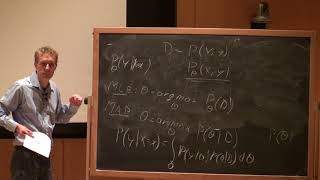
17. Bayesian Statistics
Lecture 17A: Reducing Probabilistic Reasoning (MAR) to Weighted Model Counting
Machine Learning Lecture 9 "Naive Bayes continued" -Cornell CS4780 SP17
Machine Learning Lecture 8 "Estimating Probabilities from Data: Naive Bayes" -Cornell CS4780 SP17
Machine Learning Lecture 10 "Naive Bayes continued" -Cornell CS4780 SP17
Lecture 17 - Bayesian Network
Lecture 17 - Bayesian Concept Learning (03/08/2017)
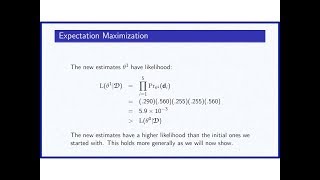
11b. Learning Parameters: Incomplete Data (Chapter 17)
Bayesian Learning - Georgia Tech - Machine Learning
View Detailed Profile
Lecture 17 - Bayesian Learning

Lecture 17 - Bayesian Learning

Machine

Lecture 17: Bayesian Nash Equilibrium: Applications

Lecture 17: Bayesian Nash Equilibrium: Applications

MIT 14.12 Economic Applications of Game Theory, Fall 2025 Instructor: Ian Ball View the complete course: ...

11a. Learning Parameters: Complete Data (Chapter 17)

11a. Learning Parameters: Complete Data (Chapter 17)

Adnan Darwiche's UCLA course:

17. Bayesian Statistics

17. Bayesian Statistics

MIT 18.650 Statistics for Applications, Fall 2016 View the complete course: http://ocw.mit.edu/18-650F16 Instructor: Philippe ...

Lecture 17A: Reducing Probabilistic Reasoning (MAR) to Weighted Model Counting

Lecture 17A: Reducing Probabilistic Reasoning (MAR) to Weighted Model Counting

Reducing probabilistic reasoning (MAR) to weighted model counting (WMC). Exploiting local structure (parametric structure) of ...

Machine Learning Lecture 9 "Naive Bayes continued" -Cornell CS4780 SP17

Machine Learning Lecture 9 "Naive Bayes continued" -Cornell CS4780 SP17

... that's actually not a crucial weakness of naive

Machine Learning Lecture 8 "Estimating Probabilities from Data: Naive Bayes" -Cornell CS4780 SP17

Machine Learning Lecture 8 "Estimating Probabilities from Data: Naive Bayes" -Cornell CS4780 SP17

Cornell class CS4780. (Online version: https://tinyurl.com/eCornellML )

Machine Learning Lecture 10 "Naive Bayes continued" -Cornell CS4780 SP17

Machine Learning Lecture 10 "Naive Bayes continued" -Cornell CS4780 SP17

All right welcome yet another

Lecture 17 - Bayesian Network

Lecture 17 - Bayesian Network

ENGI-9411: Probabilistic Methods in Engineering, delivered at Memorial University, Canada, on November 10, 2020.

Lecture 17 - Bayesian Concept Learning (03/08/2017)

Lecture 17 - Bayesian Concept Learning (03/08/2017)

Introduction to Machine

11b. Learning Parameters: Incomplete Data (Chapter 17)

11b. Learning Parameters: Incomplete Data (Chapter 17)

Adnan Darwiche's UCLA course:

Bayesian Learning - Georgia Tech - Machine Learning

Bayesian Learning - Georgia Tech - Machine Learning

Watch on Udacity: https://www.udacity.com/course/viewer#!/c-ud262/l-454308909/m-663850495 Check out the full Advanced ...

Lecture 17: Bayes Nets II

Lecture 17: Bayes Nets II

... Spring Break will be about approximate probabilistic inference and then after that we'll move on to how we can